Crape myrtle blooms have long shaped Southern landscapes, yet a...
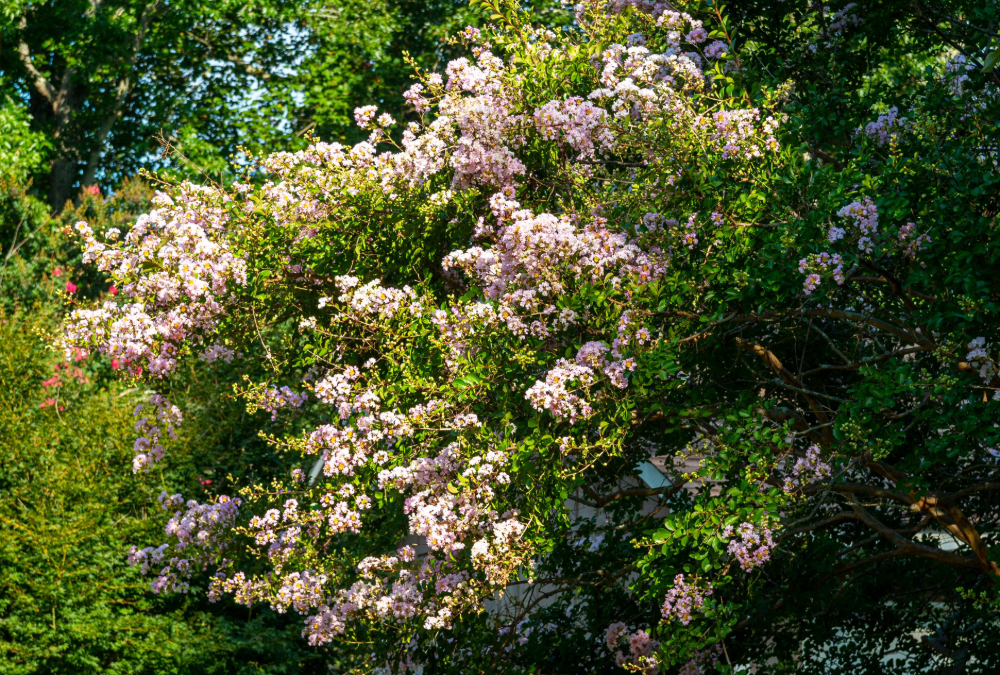

Crape myrtle blooms have long shaped Southern landscapes, yet a...
In an already stressful and trying growing season, researchers at Auburn University and Alabama Cooperative Extension professionals have confirmed an invasive insect, the two-spot cotton leafhopper, in cotton fields in Alabama. The insect is also commonly known as the...
Right in the heart of central Alabama, research is conducted throughout the year to find ways to protect one of the state’s most precious commodities—peaches. Among the most damaging diseases affecting stone fruit—especially peaches—is bacterial spot. As a result,...
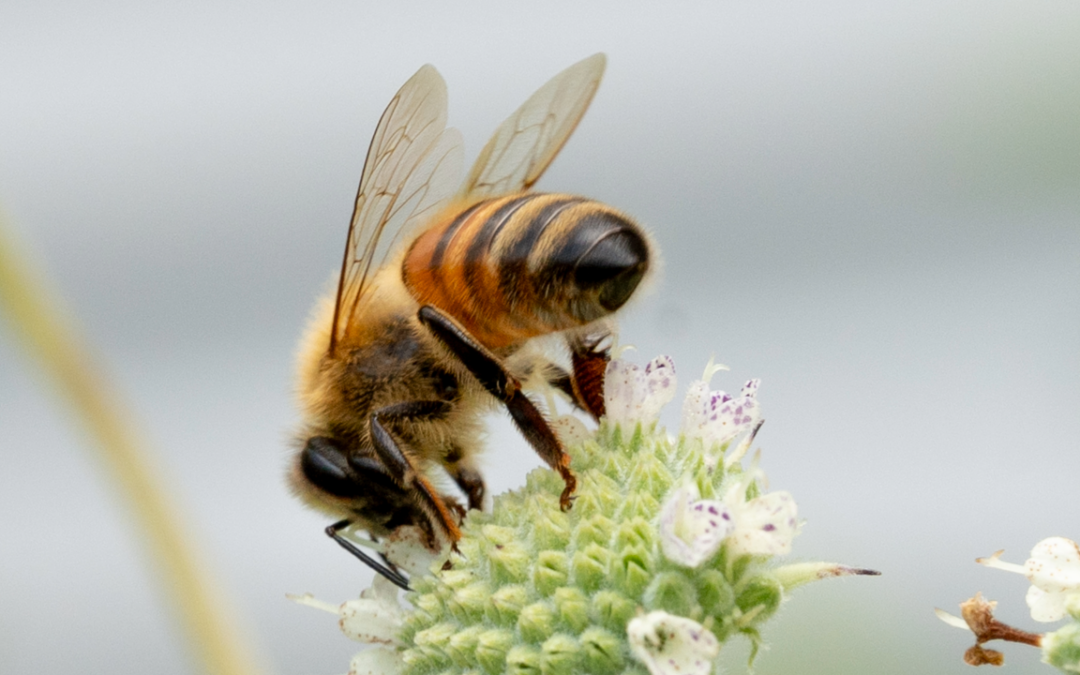
Bees appear to be social creatures, as they frequently congregate on flowers or nest in plain sight. At the Auburn University Bee Center, researchers and students are...

Next month, honeybee enthusiasts are invited to attend the 31st Annual Alabama Beekeepers Symposium. The event will take place on February 7. Alabama Extension System...
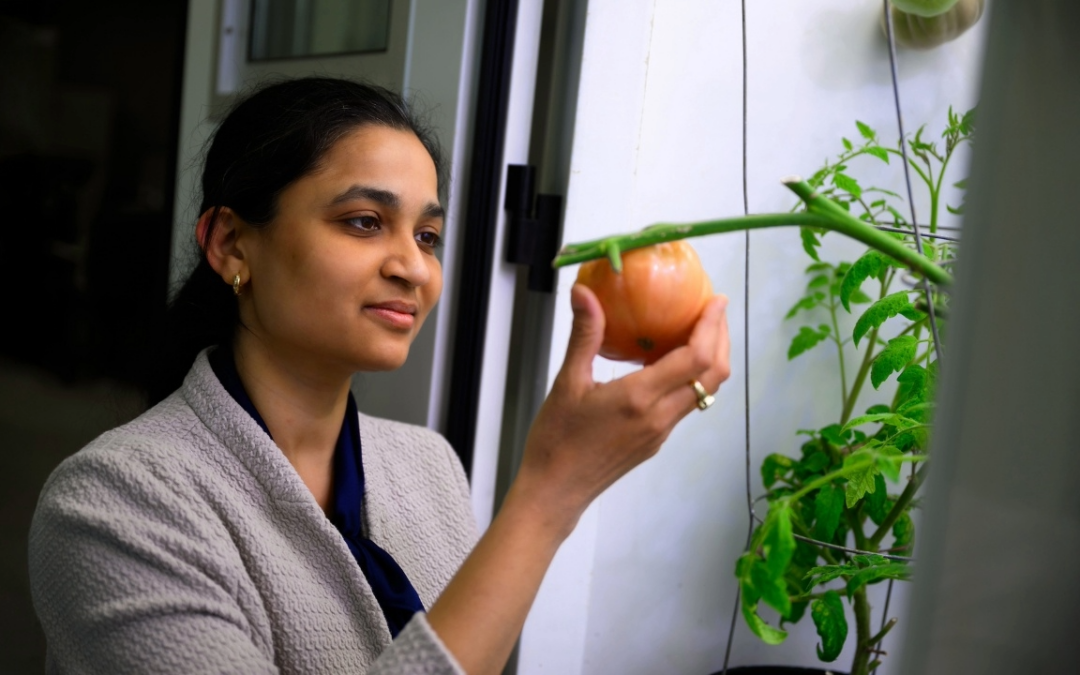
Winning the war against stealthy pathogens
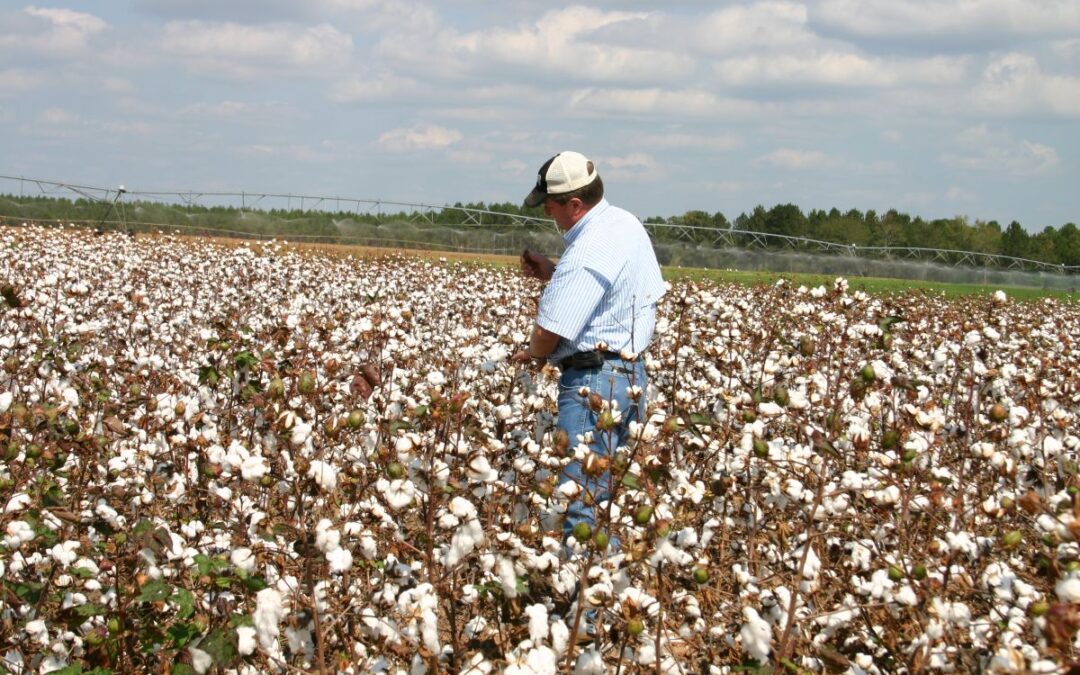
Cotton is undoubtedly one of the most recognizable plants in the world, with its heart-shaped leaves and branches that explode into powder-white fruit. But it’s also one of the more understudied field crops. “Previously, it was unclear where and which specific...
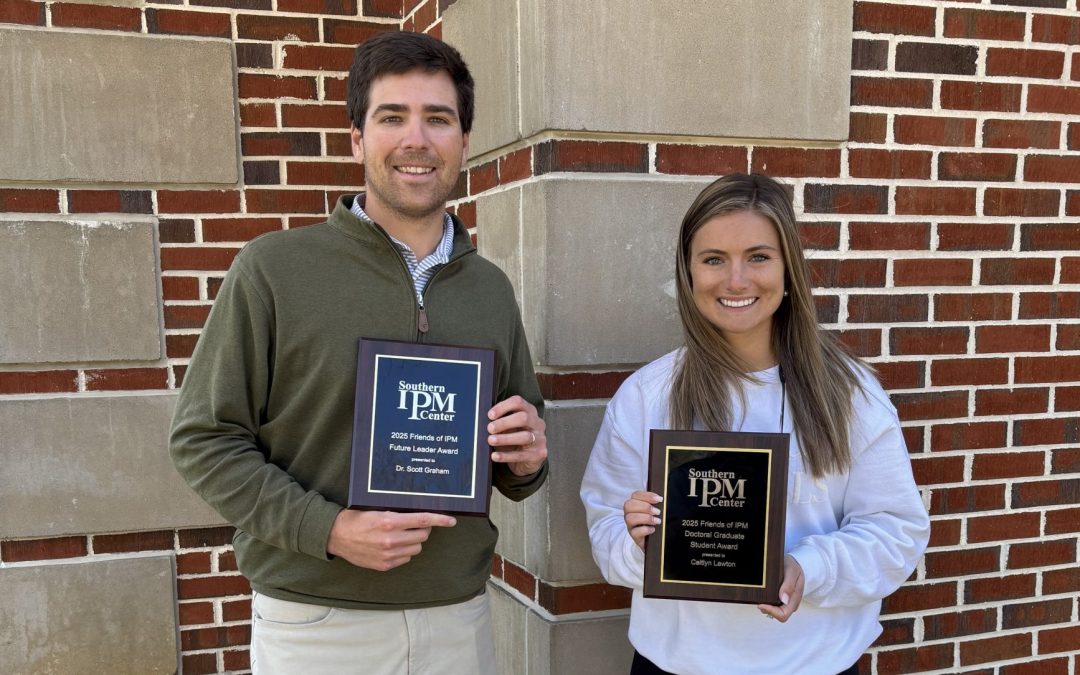
Auburn University graduate students and one faculty member rose above and beyond for this year’s Southern Integrated Pest Management (IPM) Awards. For the first time, two Auburn doctoral candidates, Caitlyn Lawton and Rogan Tokach, were honored for their achievements...
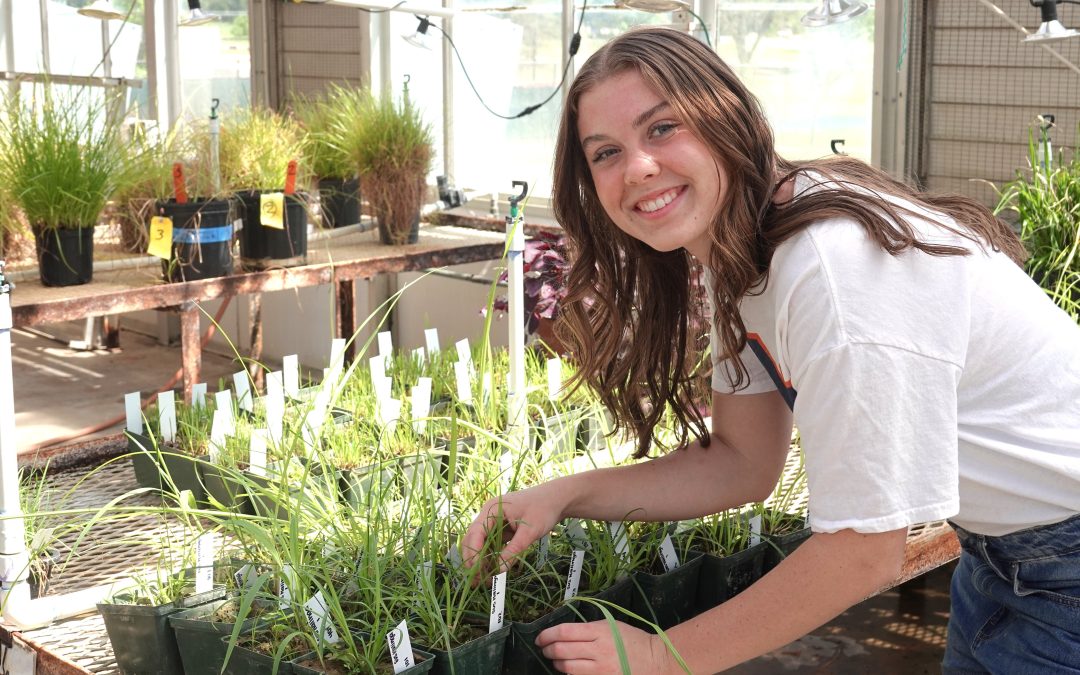
Auburn University College of Agriculture student Leah Johnson received a highly competitive collegiate internship with HudsonAlpha, a premier institute for biotechnology. She is the second student from the applied biotechnology major in the Department of Entomology...
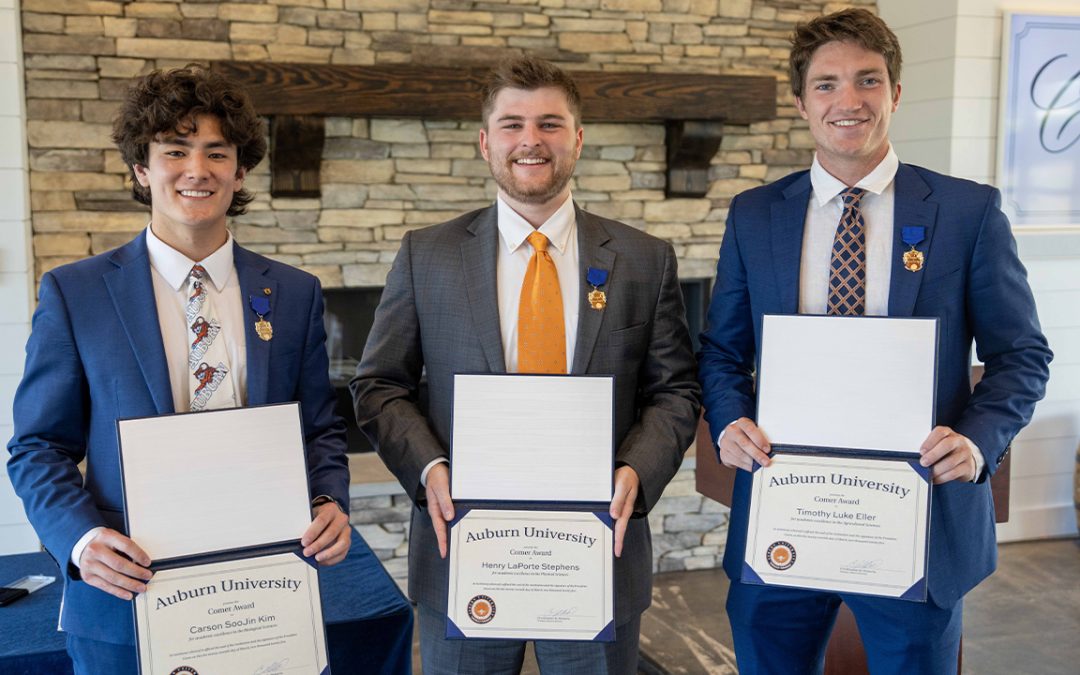
Hosted by the College of Sciences and Mathematics, in collaboration with the College of Agriculture, this year’s Comer Awards were presented to three graduating Auburn University students….

Geoff Williams, associate professor, graduate program officer and longtime director of the AU-Bees Lab, is director of the new Auburn University Bee Center, effective Tuesday, April 1. In February, the Board of Trustees approved the establishment of the Auburn...
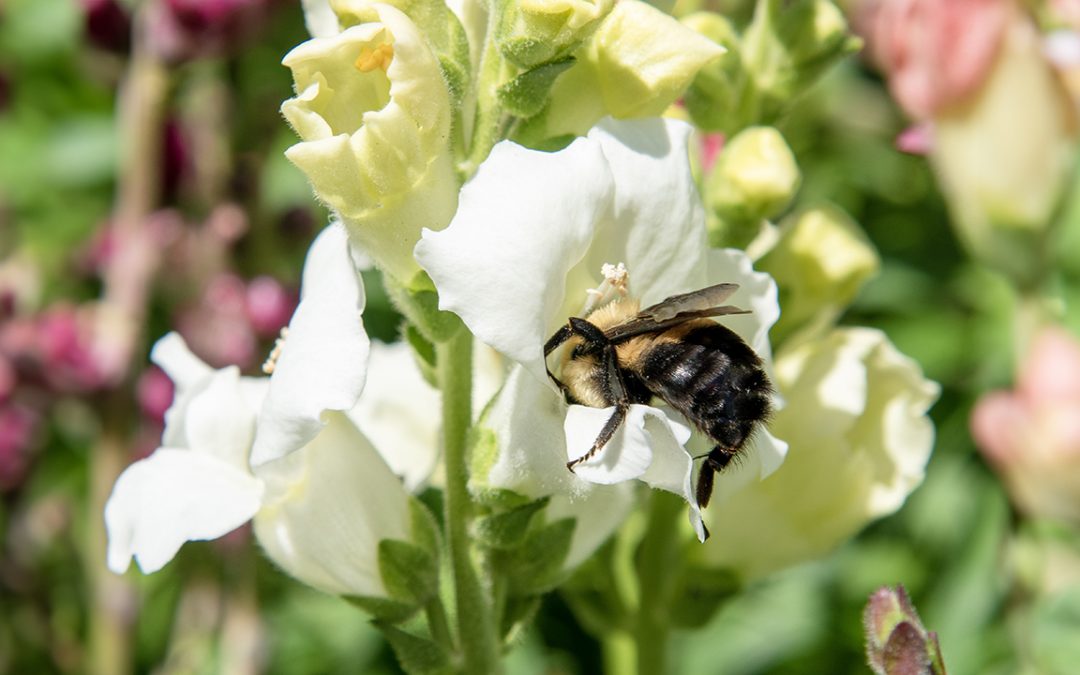
Children’s garden, new Auburn University Bee Center approved Two transformational projects for the Auburn University College of Agriculture were approved by the Board of Trustees at its meeting on Friday, Feb. 7. First, the board approved phase one of a new children’s...
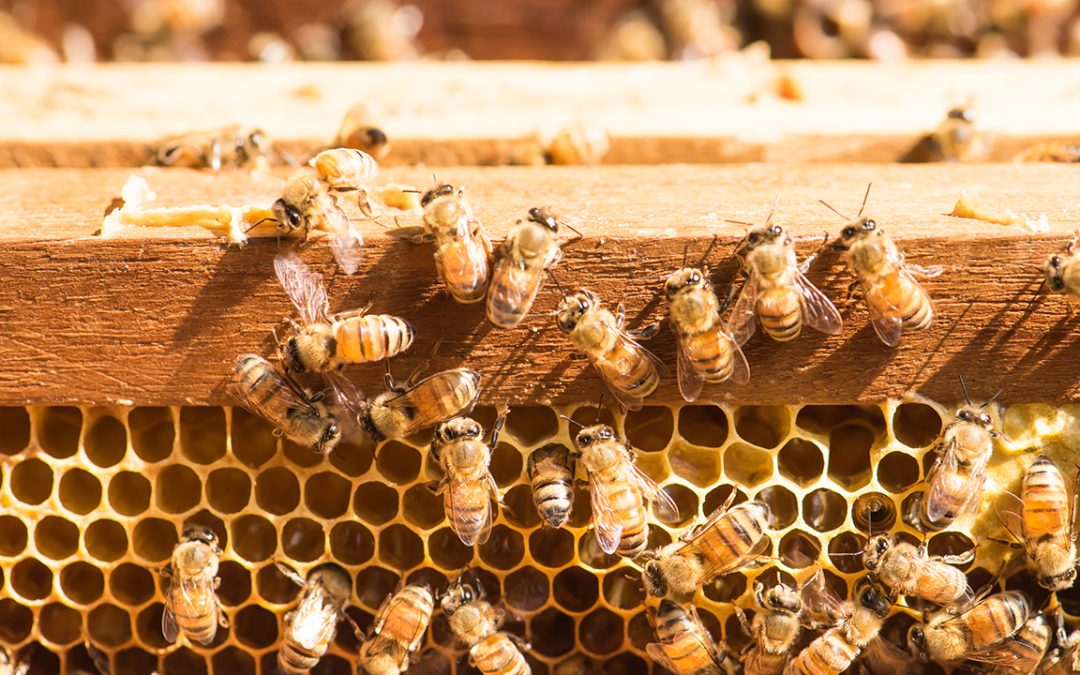
The annual U.S. Beekeeping Survey, designed and administered by Auburn University and Apiary Inspectors of America, indicates the highest colony losses since the 2010-11 beekeeping season, when colony loss rates were first determined. U.S. beekeepers lost an estimated...
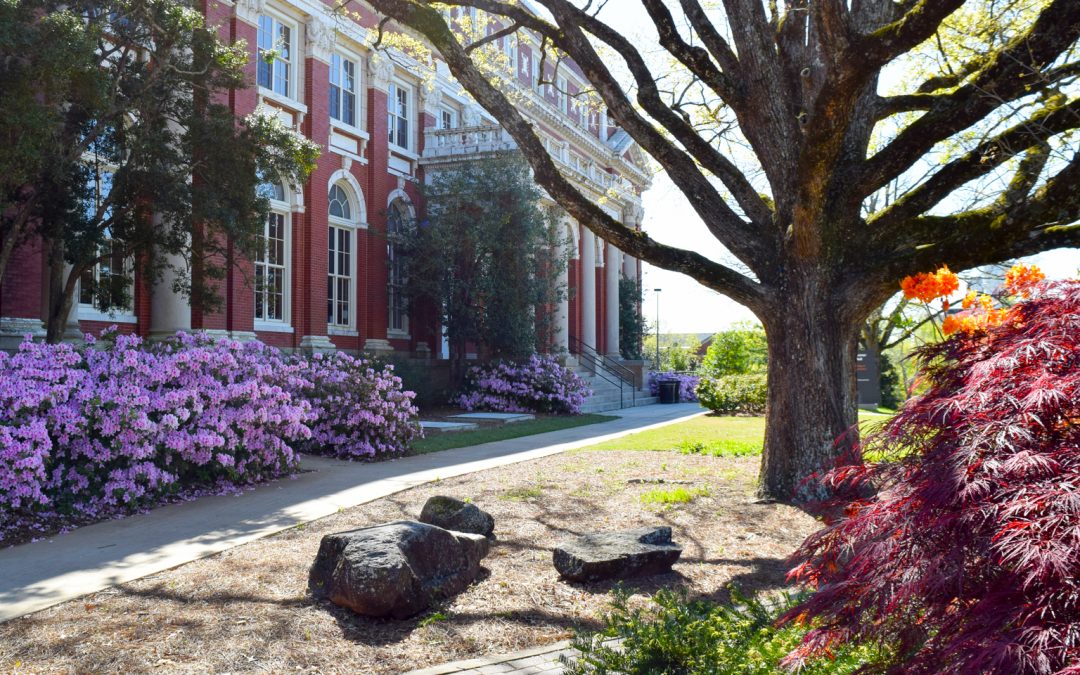
Several faculty and students in the College of Agriculture at Auburn University recently received national awards and recognitions. Read some highlights below. Beckmann receives NSF Career Award John Beckmann, assistant professor of medical-veterinary entomology and...

John Beckmann, assistant professor of medical-veterinary entomology and biotechnology in the Auburn University College of Agriculture, recently received a National Science Foundation CAREER Award. Presented by the NSF Faculty Early Career Development Program, the...
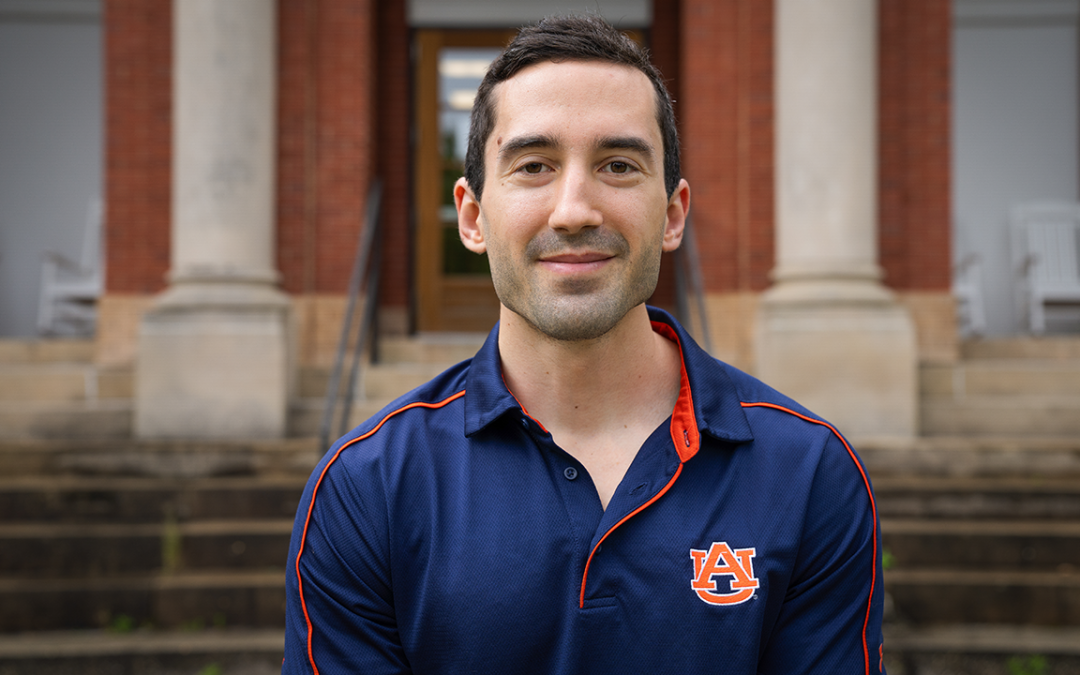
As John Mahas prepared for a move to start postdoctoral research at Cornell University, he was still wrapping up research in the Auburn University lab where he earned his master’s and doctorate. It was here he focused his work on managing the emerging cotton leafroll dwarf virus (CLRDV) and its vector, the cotton aphid, Aphis gossypii. This research led to the publication of two peer-reviewed papers, one of which marked a first in the Southeastern United States.
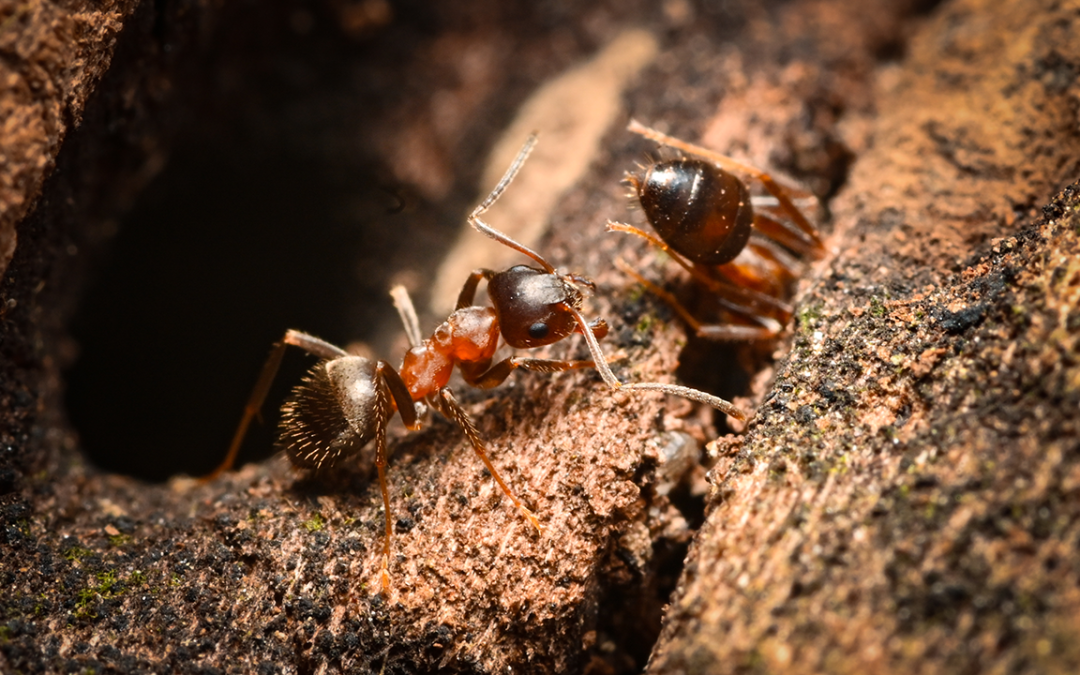
Auburn University researcher part of team identifying fast-multiplying New York City ant An unidentified ant that went viral following its discovery in the heart of New York City has finally been studied and identified. The ant first made national headlines and was...
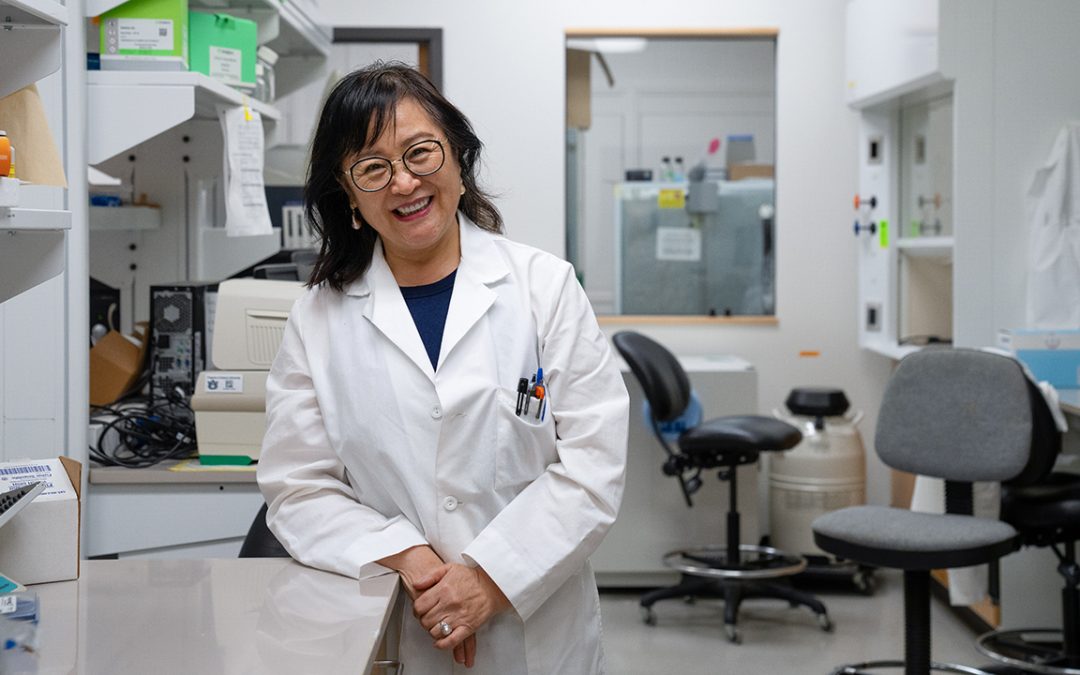
A seasoned researcher and administrator in the Auburn University College of Agriculture and one of the top 2% of entomologists in the world got her start in the field because of the kindness of a neighbor.
One of several grants offered through the Alabama Agricultural Experiment Station (AAES) research program for the current fiscal year will allow for the continuation of groundbreaking research originally established at Auburn University that focuses on using beneficial bacteria for promoting plant growth, plant health, nutrient uptake and insect pest prevention.
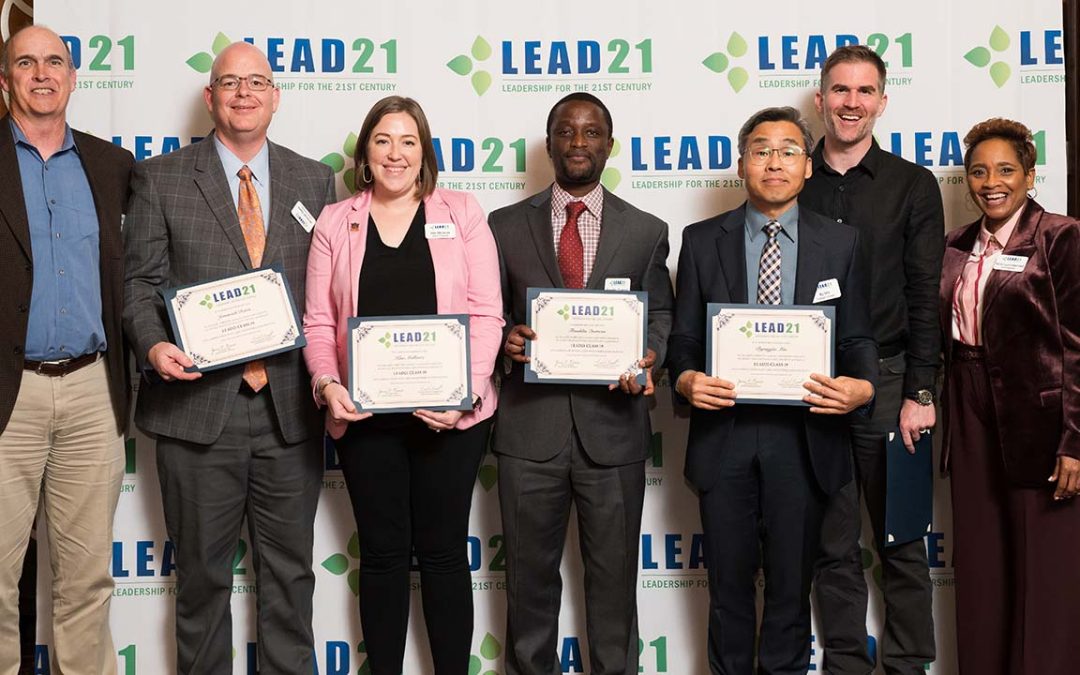
Three faculty members from the Auburn University College of Agriculture were among 88 nationally to complete the 2023-24 LEAD21 leadership-development program. They were Jeremiah Davis, professor and director of the National Poultry Technology Center; Kim Mullenix,...

The USDA National Institute of Food and Agriculture recently awarded a $3.9 million, five-year grant to a team of researchers to enhance honey bee health for pollination of specialty crops. Auburn University associate professors Geoff Williams, from the Department of...
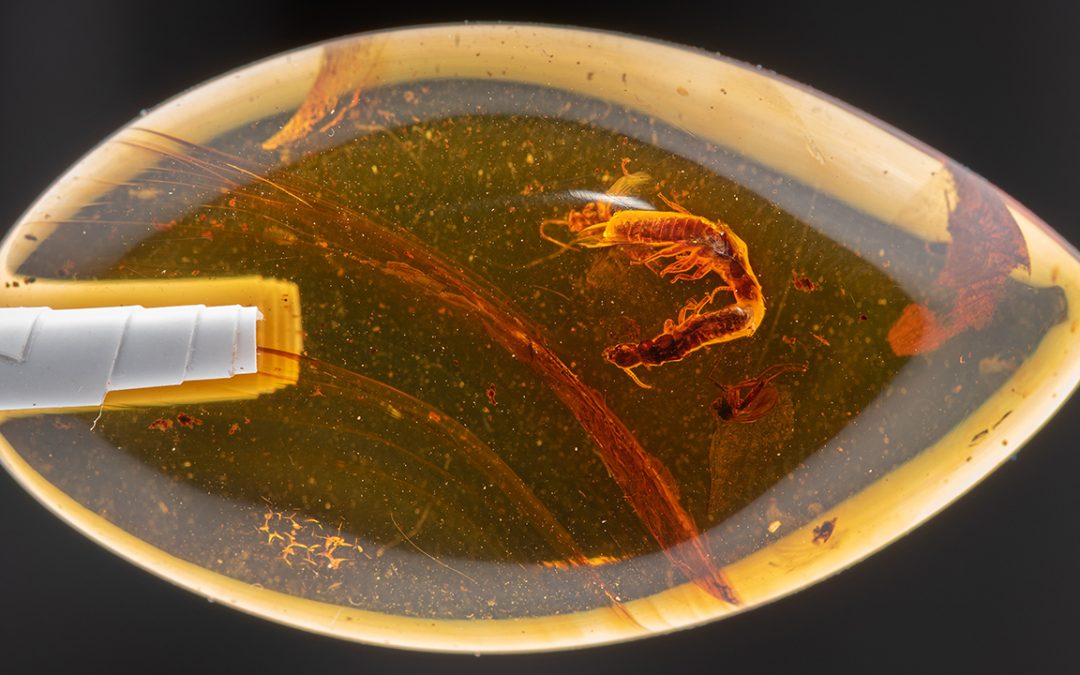
Mizumoto recreates fossilization process to test tandem run hypothesis An assistant professor in the Auburn University Department of Entomology & Plant Pathology recently found evidence that termites living millions of years ago mated the same way termites do...

An endowed professor in the Auburn University College of Agriculture is listed as among the world’s top 2% of entomologists in a database announced recently by Stanford University. “This recognition is a testimony to the impact our research has had on the broader...
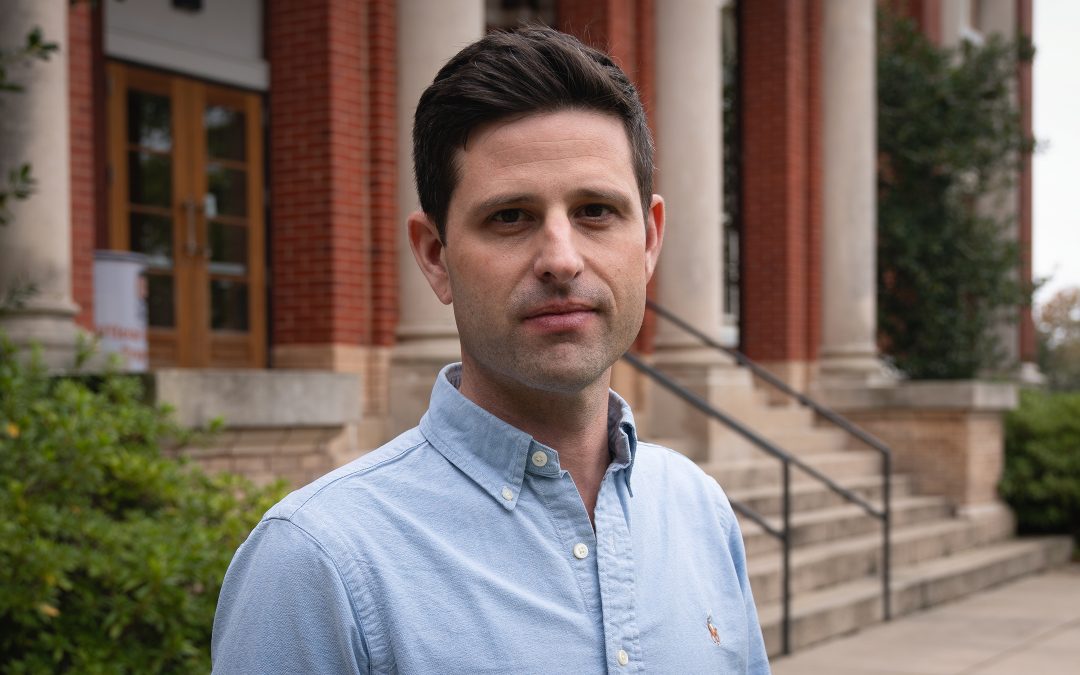
“Human” episode airing Saturday to feature Penick’s research on urban ants An episode of Planet Earth III airing in the U.S. this Saturday, Dec. 16, was made possible with the help of Assistant Professor Clint Penick in the Department of Entomology and Plant...
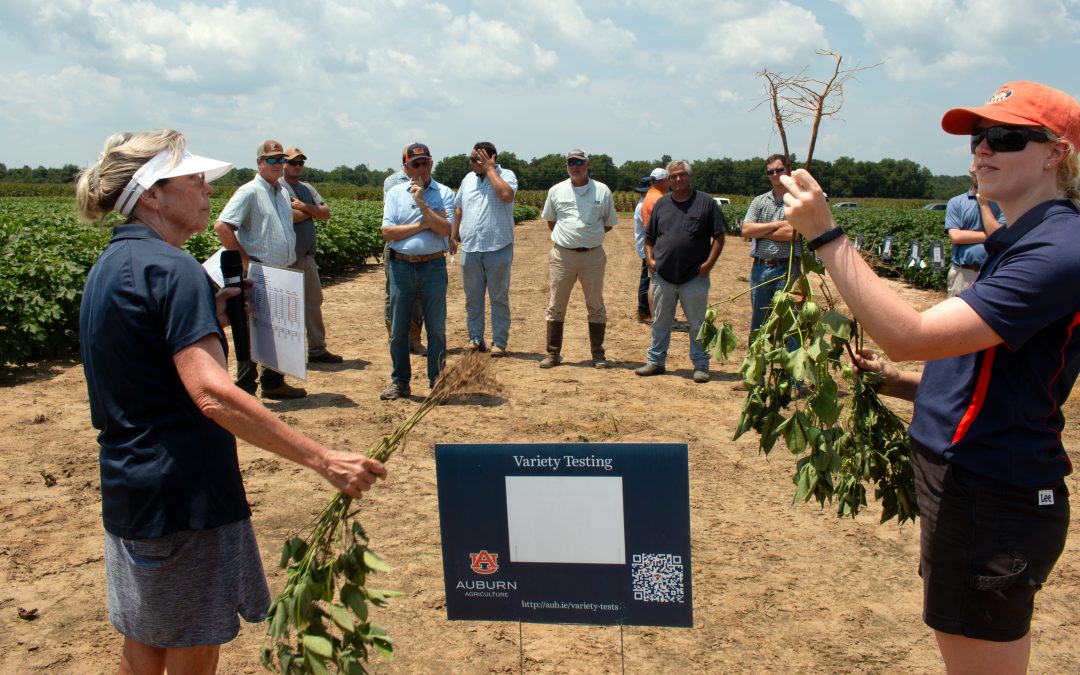
Farmers have a hard enough time battling the pests they can see. The ones they can’t see — like plant parasitic nematodes — present another challenge altogether. These worm-like, sometimes microscopic animals are major agricultural pathogens that attack Alabama crop...

Two researchers in the Auburn University College of Agriculture and the Alabama Agricultural Experiment Station are recipients of separate grants from the USDA-NIFA Agriculture and Food Research Initiative (AFRI), the nation’s leading competitive grant program for...
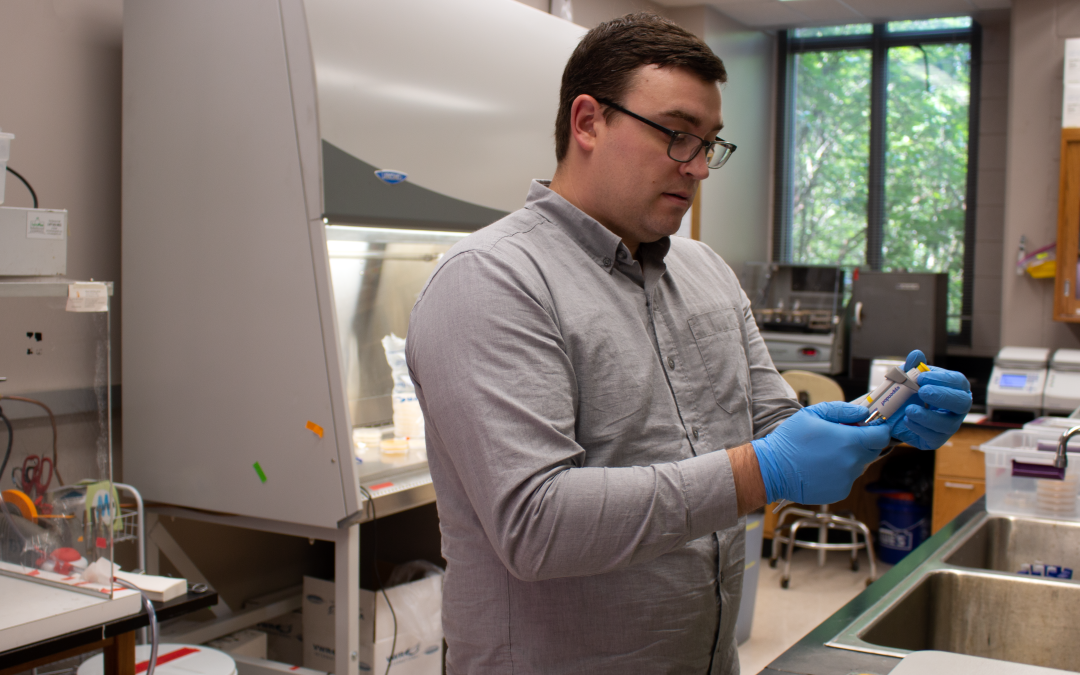
With scientific research and discovery occurring at a dizzying rate, it’s difficult to imagine there are frontiers yet to be fully explored, but the microbiome is one. While microbiomes have always existed, little is known about their function in plants and animals....
Cotton is undoubtedly one of the most recognizable plants in the world, with its heart-shaped leaves and branches that explode into powder-white fruit. But it’s also one of the more understudied field crops. “Previously, it was unclear where and which specific...
Auburn University graduate students and one faculty member rose above and beyond for this year’s Southern Integrated Pest Management (IPM) Awards. For the first time, two Auburn doctoral candidates, Caitlyn Lawton and Rogan Tokach, were honored for their achievements...
Auburn University College of Agriculture student Leah Johnson received a highly competitive collegiate internship with HudsonAlpha, a premier institute for biotechnology. She is the second student from the applied biotechnology major in the Department of Entomology...
Hosted by the College of Sciences and Mathematics, in collaboration with the College of Agriculture, this year’s Comer Awards were presented to three graduating Auburn University students….
Geoff Williams, associate professor, graduate program officer and longtime director of the AU-Bees Lab, is director of the new Auburn University Bee Center, effective Tuesday, April 1. In February, the Board of Trustees approved the establishment of the Auburn...
Children’s garden, new Auburn University Bee Center approved Two transformational projects for the Auburn University College of Agriculture were approved by the Board of Trustees at its meeting on Friday, Feb. 7. First, the board approved phase one of a new children’s...
The annual U.S. Beekeeping Survey, designed and administered by Auburn University and Apiary Inspectors of America, indicates the highest colony losses since the 2010-11 beekeeping season, when colony loss rates were first determined. U.S. beekeepers lost an estimated...
Several faculty and students in the College of Agriculture at Auburn University recently received national awards and recognitions. Read some highlights below. Beckmann receives NSF Career Award John Beckmann, assistant professor of medical-veterinary entomology and...
John Beckmann, assistant professor of medical-veterinary entomology and biotechnology in the Auburn University College of Agriculture, recently received a National Science Foundation CAREER Award. Presented by the NSF Faculty Early Career Development Program, the...
As John Mahas prepared for a move to start postdoctoral research at Cornell University, he was still wrapping up research in the Auburn University lab where he earned his master’s and doctorate. It was here he focused his work on managing the emerging cotton leafroll dwarf virus (CLRDV) and its vector, the cotton aphid, Aphis gossypii. This research led to the publication of two peer-reviewed papers, one of which marked a first in the Southeastern United States.
Auburn University researcher part of team identifying fast-multiplying New York City ant An unidentified ant that went viral following its discovery in the heart of New York City has finally been studied and identified. The ant first made national headlines and was...
A seasoned researcher and administrator in the Auburn University College of Agriculture and one of the top 2% of entomologists in the world got her start in the field because of the kindness of a neighbor.
One of several grants offered through the Alabama Agricultural Experiment Station (AAES) research program for the current fiscal year will allow for the continuation of groundbreaking research originally established at Auburn University that focuses on using beneficial bacteria for promoting plant growth, plant health, nutrient uptake and insect pest prevention.
Three faculty members from the Auburn University College of Agriculture were among 88 nationally to complete the 2023-24 LEAD21 leadership-development program. They were Jeremiah Davis, professor and director of the National Poultry Technology Center; Kim Mullenix,...
The USDA National Institute of Food and Agriculture recently awarded a $3.9 million, five-year grant to a team of researchers to enhance honey bee health for pollination of specialty crops. Auburn University associate professors Geoff Williams, from the Department of...
Mizumoto recreates fossilization process to test tandem run hypothesis An assistant professor in the Auburn University Department of Entomology & Plant Pathology recently found evidence that termites living millions of years ago mated the same way termites do...
An endowed professor in the Auburn University College of Agriculture is listed as among the world’s top 2% of entomologists in a database announced recently by Stanford University. “This recognition is a testimony to the impact our research has had on the broader...
“Human” episode airing Saturday to feature Penick’s research on urban ants An episode of Planet Earth III airing in the U.S. this Saturday, Dec. 16, was made possible with the help of Assistant Professor Clint Penick in the Department of Entomology and Plant...
Farmers have a hard enough time battling the pests they can see. The ones they can’t see — like plant parasitic nematodes — present another challenge altogether. These worm-like, sometimes microscopic animals are major agricultural pathogens that attack Alabama crop...
Two researchers in the Auburn University College of Agriculture and the Alabama Agricultural Experiment Station are recipients of separate grants from the USDA-NIFA Agriculture and Food Research Initiative (AFRI), the nation’s leading competitive grant program for...
With scientific research and discovery occurring at a dizzying rate, it’s difficult to imagine there are frontiers yet to be fully explored, but the microbiome is one. While microbiomes have always existed, little is known about their function in plants and animals....